
Frailty in Older Adults: Act Early. Protect Muscle. Preserve Independence.
Frailty is a clinical syndrome characterised by declining physiological reserves, increasing vulnerability to adverse health outcomes. It can progress over time and accelerate during illness, moving from mild to moderate and severe stages.
If identified too late, opportunities for successful intervention can become limited.
To protect independence and quality of life for longer, clinical guidelines call for earlier, routine screening in older patients, followed by comprehensive assessment and holistic care planning. Frailty is not an inevitable part of ageing, but a modifiable condition that can be addressed through targeted physical, psychological and nutritional interventions. Within nutrition, early management of malnutrition and sarcopenia is critical, with high-protein medical nutrition, individualised dietetic care and exercise playing an important role in slowing or even reversing frailty.
 Pretty woman in workwear helping black senior man filling papers
33 items
15h40m
EN
Evidence shows frail older patients can lose up to 10 % of skeletal muscle mass within just 10 days of an acute hospital admission, resulting in extremely high incidence of sarcopenia (up to 74%) and malnutrition (up to 73%) if treatment is not commenced early.
Frailty and muscle loss in older adults is driven by the convergence of inactivity, malnutrition, and sarcopenia, conditions that are closely interrelated and mutually reinforcing. Sarcopenia prevalence reaches up to 76% in rehabilitation settings among patients with malnutrition, making nutritional status a direct predictor of muscle health trajectory. Changes in muscle mass, strength, and function before and after acute hospitalization are key determinants of the level of disability and associated in the years following.
Current guidelines and recommendations highlight high-protein medical nutrition, personalised dietetic support and exercise as the standard treatment approach for managing sarcopenia and malnutrition in frail older adults.
 Content for landing pages (6016 x 4016 px) - Fraility
 Doctor giving an handshake to a senior patient
Neither protein supplementation nor functional exercise alone produces consistent improvements in frail older adults. A clinical trial in nursing home residents aged 75 and over examined the combined effect of sit-to-stand exercises and protein-rich oral nutritional supplementation over 12 weeks, with outcomes measured across physical function, body composition, and nutritional status.
Overall results were modest, but subgroup analysis showed that residents with high adherence to both the exercise and supplementation components achieved gains in fat-free mass, weight stability, and maintained functional performance. The findings highlight adherence as the key determinant of outcome, with direct implications for how combined interventions are designed and monitored in long-term care settings.
Muscle mass and function decline under combined pressure from ageing, acute illness, and inadequate protein intake. In older adults, this trajectory is further complicated by conditions such as hip fracture, respiratory disease and heart failure, where treatment-related catabolism compounds age-related muscle loss and creates a clinical picture that standard care pathways are not designed to address.
A proactive, multidisciplinary nutritional approach, centred on adequate protein provision and timed alongside physical rehabilitation, is associated with reduced disability onset and better recovery trajectories. The evidence now supports treating targeted nutritional support not as adjunctive care, but as a primary clinical strategy for preserving autonomy in frail and at-risk older patients.
 Old bearded man sitting in wheelchair while doctor standing behind
Related Content
- Items
- Collections

Evidence behind the synergetic benefit of exercise and nutrition intervention: How to optimize musculoskeletal recovery in older patients

Evolution of nutritional care pathways in fragility fractures: A time critical perspective
webinar
12m
en

Not completed
The EFFORT Protein and PRECISe trials on protein dosing for critically ill patients
video
27m
en

Not completed
Reframing clinical nutrition as a game changer to optimise patient outcomes.
webinar
10m
en

Not completed
Guidance for assessment of muscle mass phenotypic criterion for the GLIM diagnosis of malnutrition
infographic
5m
en
es

Not completed
Efficacy of muscle-targeted intervention: Proactively treating malnutrition and sarcopenia in adult rehabilitation NutriEcomuscle study

EMPOWER-GR: barriers and opportunities to combat sarcopenia in geriatric rehabilitation
webinar
14m
en

Not completed
muscle-mass-sarcopenia
missOrigin

Nutrition Essentials: Frailty
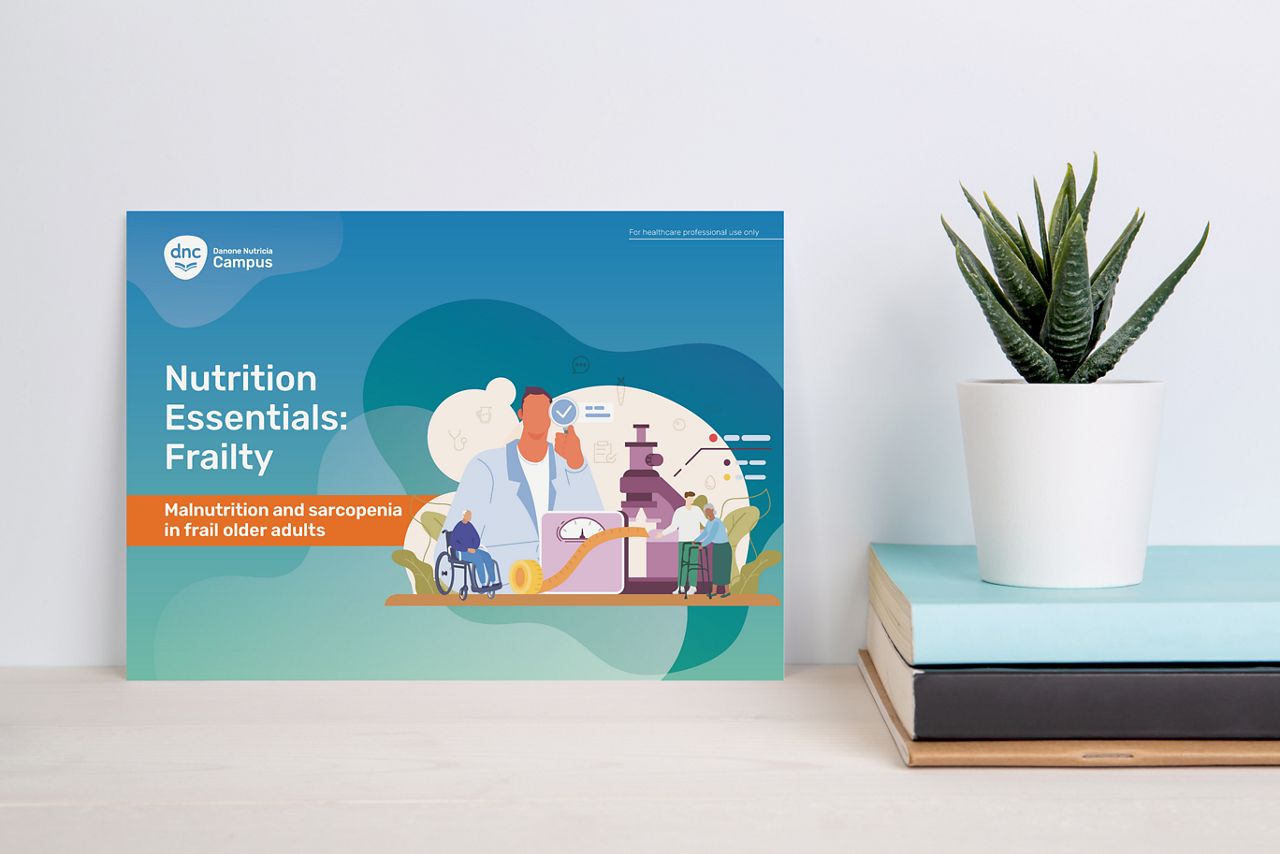
Why muscle-targeted nutrition should be first-line in frailty
missOrigin

muscle-targeted-nutritional-therapy
missOrigin
webinar
11m
en

Not completed
spotlight-biotics

spotlight-c-section
11 items
en

2x
1x
1x
1x
1x
5x
Not completed
PPPP 2026
3 items
en

Not completed